Manilov and Lizanka’s marriage
Dead SoulsManilov and Lizanka’s marriage is a portrait of mutual tenderness detached from responsibility. More than eight years into their life together, the pair still exchange sweets, gifts, and languishing kisses; yet their affectionate domestic rituals coexist with unfinished rooms, neglected household management, and projects that never leave the realm of conversation. Their marriage is neither exposed as false nor treated as sufficient: its warmth is genuine, but the novel makes its narrowness visible by setting private devotion against the work of maintaining a household and estate.
A marriage of ritual affection
Manilov and Lizanka repeatedly turn ordinary moments into small ceremonies of endearment. One offers the other a piece of apple, a bonbon, or a nut, inviting the beloved to open their mouth for the treat. For birthdays they devise surprise gifts, such as a glass container for tooth powder. When seated together on the sofa, they may put aside pipe and handiwork to kiss at length. These gestures have persisted through more than eight years of marriage, giving their life together the air of an affection kept continually fresh through repetition.
The tenderness is reciprocal rather than a one-sided performance. Manilov tells Chichikov that Lizanka has asked why their friend has not visited, while he has assured her that the guest would soon come. Their matching recollections turn Chichikov’s arrival into a shared emotional occasion. The narrator calls them a very happy couple, allowing the claim its literal force even as the surrounding account makes their happiness seem enclosed within its own rituals.
The household beyond the sofa
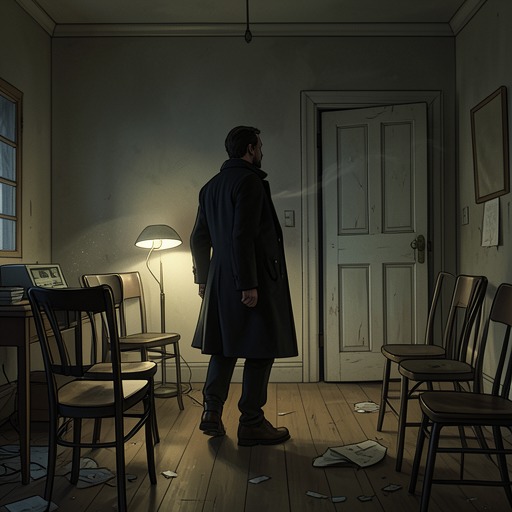
The marriage’s private idyll is set against visible incompletion. Manilov imagines improvements to the estate, including a carriage drive, a stone bridge across the pond, and shops supplying the peasantry, but the plans remain talk. Inside the house, two chairs in a finely furnished drawing room are still covered only with bast; for years Manilov has warned guests not to sit on them because they are not ready. Another room remains unfurnished despite an earlier promise between husband and wife to procure temporary furniture the next day. Their domestic world is thus marked by plans that are voiced and then left suspended.
Neglect is also apparent in the objects they use and the labor they overlook. A bronze candelabrum, a figure of the Three Graces, a mother-of-pearl tray, and a crooked copper invalid stand on the drawing-room table each evening, all thickly coated with grease, without the couple or their servants seeming to notice. The narrator widens the contrast from furnishings to management: the kitchen, storeroom, housekeeper, and servants all require attention, yet these practical duties do not command the same concern as affectionate exchanges and ingenious surprises. The relationship’s ease is therefore inseparable from a failure to attend to the conditions that sustain a household.
Lizanka and the education of domesticity
The account connects Lizanka’s habits to her genteel upbringing and to the education offered in boarding schools. Its satirical description of that education places the French language, piano-playing, and the making of knitted purses and other presents among the supposed foundations of virtue and married life. Different seminaries rearrange the priorities, but the list remains confined to accomplishments and pleasing tokens rather than the oversight of food, servants, or domestic order.
This passage does not deny Lizanka’s affection for her husband; instead, it shows how a narrow model of feminine cultivation shapes the marriage’s definition of care. The couple’s mutual gifts and tenderness are carefully attended to, while the surrounding household’s needs go largely unattended. Lizanka’s domestic role is thus described through both personal affection and the limited training the narrator associates with genteel womanhood. The contrast gives the marriage its social dimension: what appears to be private contentment is also a way of life formed by conventions that leave practical responsibility out of view.
Chichikov’s visit and the fantasy of permanence
When Chichikov prepares to leave, Manilov is suddenly dismayed, and Lizanka enters to ask whether their guest is departing so soon. Her regret and her husband’s response show their hospitality as a joint expression of attachment: they are reluctant to let a visitor who has become the focus of their shared anticipation go. Chichikov answers with elaborate assurances of his pleasant memories and says that he could imagine no greater blessing than living in their immediate neighborhood.
Manilov receives the suggestion enthusiastically, picturing the two men reclining under an elm tree, talking philosophy, and probing the roots of things. Chichikov agrees that such an existence would be paradisiacal, then takes his leave. The episode extends the couple’s sentimental ideal beyond the marriage itself: Manilov turns a passing courtesy into a vision of enduring proximity and shared contemplation. Yet Chichikov’s departure proceeds, and Manilov’s imagined future remains as unrealized as the bridge, shops, and unfinished room. The marriage’s defining contrast persists to the scene’s end: its emotional gestures are abundant and immediate, while the practical world around them waits for action.